
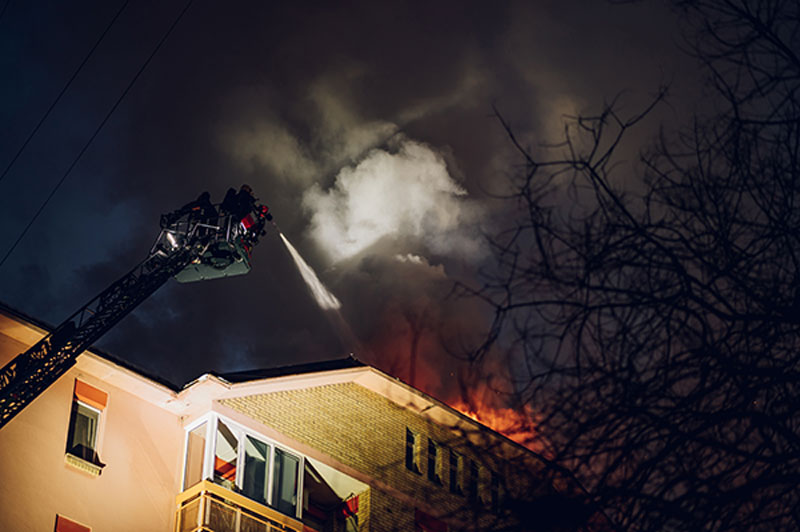
Did you know that an apartment building is more likely to catch fire compared to other residential structures? According to data from the National Fire Protection Association (NFPA), an average of around 75% of fires each year damaged residential structures and about 30% of these residential fires impacted apartments or multi-family residences. Apartment building fires caused an average of roughly $1.7 million annually in damages and losses.
Because of this, apartment owners must do their best to keep fires from damaging their building and affecting their income, not to mention disrupting tenants, investors, and insurance. Fire prevention is always your best bet, but if a fire does break out in your apartment building, knowing what to do next will save you from headaches down the road to recovery and rebuilding.
Here’s what you should do if there is a fire in your apartment building.
Your Top Priority: Ensure Everyone’s Safety First
Typically, when a fire breaks out in an apartment building, smoke alarms should activate. Following this, residents should evacuate the building according to a pre-determined escape plan.
If fire services haven’t been alerted about the fire yet, then get in touch with them as soon as you are safely outside. If they are on their way, then you should wait for them safely outside of the building. Once they arrive and you think there are still people inside, inform the firefighters where you think they might be.
As the fire rages on and while the fire fighters are trying to extinguish it, do not attempt to go back inside the apartment building for any reason. You should also stop anyone from trying to enter the burning property. As the property owner, it is your top priority to ensure the safety of all your building’s residents. No one should be allowed to re-enter the apartment building until the authorities have announced that it is safe to do so.
In addition to ensuring the safety of your tenants, it is also your duty as the landlord to provide alternative accommodations to the building’s residents in the event that the fire damage has left the apartment uninhabitable. You should also facilitate repairs as soon as possible.
Filing Insurance Claim on Your Own
There are several steps you need to take to secure your insurance claim. Although it involves calling the insurance company to report the fire, that’s just one step in the process. You’ll need to complete the process by following the steps outlined below to ensure that you’ll receive the compensation you’re entitled to under your insurance policy.
Report the Fire to the Insurance Company
This is a vital step that should be done promptly. Call your insurance provider immediately to report the fire. This will mark the beginning of the claims process. Do this as soon as possible, as delays can complicate or compromise your claim.
It is also important to cooperate with the insurance company throughout the claims process. When asked, provide them with the information and documentation they require.
Regularly follow up with them too. Keep in touch in a persistent but patient manner to stay updated on the progress of your claim.
Get Advance Payments, If Available
Some insurance providers offer advance payments, which can help you cover urgent expenses after a fire, such as temporary housing and essential repairs. This is part of your total claim amount, but it isn’t the final settlement.
If your insurance company provides advance payments, remember to keep all the receipts. You will need this documentation to get your final claim.
Document All Damages
Among the very first things you need to do when filing an insurance claim is to take detailed documentation of all the damages. Be thorough with it.
- Photos and Videos: Take photos and videos of all affected areas, including those with smoke damage and structural damage as well as damage to belongings.
- Detailed Inventory: You should create a comprehensive list of all the damaged and lost items. This will help the insurance company understand the extent of your losses. Include a detailed description of the damages, its condition, the item’s age, and its value. If available, gather their receipts, purchase records or other proof of purchase as well to support your claim and speed up the process. Update your list promptly if you find or remember more damage.
- Records of All Communications: Keep a record of all your communications with the insurance provider. Every interaction should have the date, time, and details of the conversation.
- Receipts: You should also save all the receipts for any immediate repairs or expenses related to securing the apartment building.
This documentation serves as evidence to support your claim. And, remember that the more evidence you have, the stronger your claim will be.
Secure the Property
After documenting the damage, it’s time to secure the apartment building to avoid further damage. This step includes boarding up windows and doors and covering the roof and other openings. Remember that this only includes necessary temporary fixes to protect your property from weather and potential vandalism. It’s not the time to make major repairs yet. Save that until after the insurance adjuster has assessed the damage.
Review Your Insurance Policy
To manage your expectations, take time to check your insurance policy. Look at what’s included in the coverage as well as any limitations or exclusions.
Filing an Insurance Claim with the Help of a Public Adjuster
Dealing with a disaster, such as a fire, can be overwhelming by itself. Add to that the complexities of navigating the insurance claims process, and you might have bitten off more than you can chew. That is why, if you’re not in the proper head space to deal with this situation, you can always ask for help. In this case, you can hire a public adjuster to assist you with the claims process.
Public adjusters are insurance professionals who work for you. As such, they will ensure that your claim is comprehensive and accurate, thus maximizing your settlement. They will always work to get you a fair settlement and that you are not being short changed by the insurance company. In case there are disputes, they bring their knowledge and experience to the negotiating table, so that you get a higher settlement amount than you would have gotten on your own.
Here are the steps a public adjuster takes to assist you on your insurance claim.
- Policy Review: The first thing a public adjuster will do is get a copy of your insurance policy. Once they understand the coverage, limits, and exclusions, they will formulate a strategy to maximize your claim settlement.
-
- Detailed Assessment of Damages: The next step is conducting a comprehensive assessment of the damage in the apartment building. This includes any loss of personal property, structural damage, and additional living expenses. Your public adjuster will need this info to compile a complete list or inventory of losses.
- Documentation and Collecting Evidence: This step involves capturing photos and videos, gathering all necessary documentation, and preparing detailed lists of damaged or lost items. This will serve as evidence to support your claim. Your public adjuster may also get reports from fire departments, forensic engineers, and other experts to boost your claim.
- Preparing and Filing Your Claim: Your public adjuster will prepare all documentation and ensure that they are accurate and submits them on your behalf within the period stipulated in your insurance policy.
- Negotiating with the Insurance Company: Leveraging their expertise, your public adjuster will negotiate with the insurance provider to ensure that you are fully compensated for your loss and receive the highest settlement possible.
Settlement and Closure: Facilitating the settlement process, your public adjuster will assist you in understanding any rules or requirements of the agreement and ensure that you receive the payment promptly.